|
제품 상세 정보:
|
| 목: | 플라스틱 UHMWPE 플랫폼 펜더 표면 패드 | 재료: | 100% 버진 PE |
|---|---|---|---|
| 색상: | 파란색, 검정색, 노란색 | 표준 크기: | 500*500*10mm |
| 두께: | 5-200mm | 분자량: | 5~9백만 |
| 애플리케이션: | 보트 및 부두 | ||
| 강조하다: | PE 도크 펜더 페이스 패드,플라스틱 UHMWPE 플랫폼 펜더 표면 패드,UHMWPE 해양 플랫폼 펜더 |
||
Listing 37754087
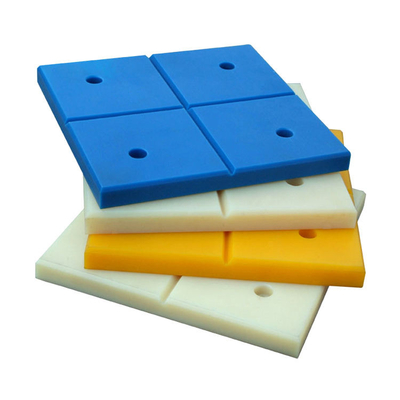
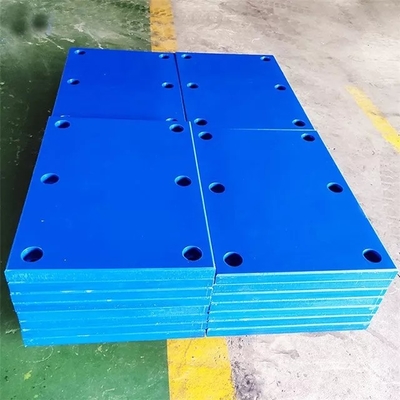
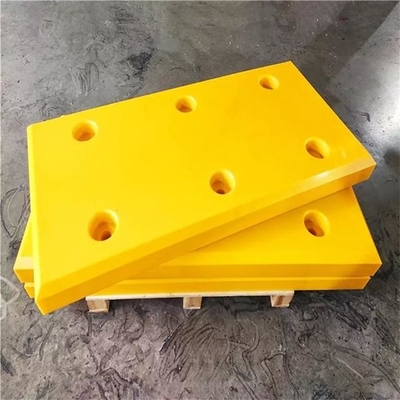
Tangyin Taixing Engineering Plastics Co., Ltd.의 PE 도크 펜더 페이스 패드는 100% 버진 PE로 500mm x 500mm x 10mm 표준으로 기록되며, 분자량은 5백만에서 9백만 사이입니다. 파란색, 검은색 또는 노란색으로 공급되며 도크 펜더 또는 부두 구조물의 페이스에 사용됩니다. 동일한 리스팅의 두께 밴드는 5mm에서 200mm까지이며, 따라서 밴드에서 더 높은 두께를 선택하면 동일한 재료로 더 두꺼운 패드를 만들 수 있습니다.
| Recorded field | Value held for this listing |
|---|---|
| Manufacturer | Tangyin Taixing Engineering Plastics Co., Ltd. |
| Model Number | PE Dock Fender Face Pad |
| Item description | Plastic UHMWPE dock fender face pad |
| Material | 100 per cent virgin PE, ultra-high molecular weight polyethylene |
| Molecular weight | 5 - 9 million |
| Standard size | 500 mm x 500 mm x 10 mm |
| Thickness band | 5 mm to 200 mm |
| Colours | Blue, black, yellow |
| Application field | Boat and docks |
| Place of origin | China |
| Certification | Quality management system covering the manufacture of polyethylene sheet and machined plastic products |
| Minimum order quantity | 50 pieces |
| Price basis | Negotiable |
| Payment terms | T/T, Western Union |
| Supply ability | 50,000 pieces per month |
| Delivery time | 15-20 days after deposit received |
| Packaging | Wooden crate or pallet |
Conflict note: the original description lists panel formats of 1220 x 2440 mm, 1200 x 4000 mm, 1250 x 3100 mm and 2200 x 1000 mm, which are sheet formats for the works as a whole; the attribute record fixes a standard 500 x 500 x 10 mm pad for this listing and that governs, with the recorded 5-200 mm band defining how far a pad may be thickened. The attribute set records molecular weight and not density, so the 0.94-0.98 g/cm3 density, the friction coefficient of 0.11-0.17, impact strength of 140 kJ/m2 and above, compressive strength of 42 MPa and above and water absorption below 0.01 % that appear in the description table are reported as description-sourced context, never as attribute records. The description's own FAQ quotes a 5-10 day stock lead time against the recorded 15-20 days after deposit; the recorded commercial terms are used on this page.
| Variable | Recorded position | What it decides on site |
|---|---|---|
| Pad face size | 500 mm x 500 mm standard | A 500 mm square is a hand-portable pad that one fitter can hold against a fender face while the first bolt goes in |
| Pad thickness | 10 mm standard, band 5-200 mm | A 10 mm pad is a facing over a fender body; a deeper pad is used where the bolt head must be buried below the rubbing face |
| Colour | Blue, black, yellow | Colour is recorded per order and is normally chosen to read against the fender body and the water for inspection |
| Hole pattern | Not recorded | Countersunk and pre-drilled patterns are drawing-driven work, not a catalogue variant of this model string |
How the pad is built
A fender face pad is the part that meets the hull. The rubber or steel fender body behind it provides the energy absorption; the pad provides a low-friction, non-splintering, corrosion-proof contact face that the hull slides against as the vessel works alongside. The PE Dock Fender Face Pad from Tangyin Taixing Engineering Plastics Co., Ltd. is pressed from 100 per cent virgin PE at a molecular weight of 5 to 9 million and finished to a 500 mm x 500 mm plate, 10 mm as standard, with the recorded 5-200 mm band available where a thicker facing is called for.
The recorded molecular weight of 5 to 9 million is what separates this pad from an ordinary polyethylene plate. At that chain length the material resists gouging and does not craze under repeated impact, and the description's point that the material is grain-free so it will not splinter or crush is the visible result: a hull pressing against the pad meets a continuous face that yields slightly and returns, instead of a face that breaks into hard fragments that then grind between hull and fender.
The same property explains the low friction that the description quotes as 0.11-0.17. That range is higher than the figure a dry-goods chute liner would show, and the difference matters at a berth: a pad that is too slippery lets the hull slide constantly and transfers the working load straight into the fender bolts, while a face in this range holds the hull enough to settle the vessel without locking it. The pad is a contact interface, not a bearing surface.
A 10 mm pad is a facing. It cannot bury a large countersunk head with material left beneath it, so on the standard pad the fastening is either a shallow countersink with a small head or a washer-faced fixing taken through to the fender body. Where the specification calls for the head to sit fully below the rubbing face, the pad has to come from further up the recorded 5-200 mm band, and that is a decision made at order stage rather than on the berth.
Bolts through a marine pad need isolation. A stainless fastener in contact with a polyethylene pad is electrically quiet, but the fastener also passes into the fender body or the wharf structure, and that is where dissimilar-metal corrosion starts. Use an isolating washer under the head and a sleeve or a sealant at the shank where the pad sits against a steel structure, and keep the pad face free of metal that the hull can strike.
The edge of the pad is a snag point. A square 10 mm edge presented to a moving hull will catch on a rub rail, a fender rope or a protruding fitting, and a caught edge peels the pad off its fasteners. A chamfer or a radius on the outer edge lets the hull ride over the pad instead of into it, and it also removes the sharp corner that chips when the pad is handled on the quay.
No chamfer size is recorded for this listing, so the edge detail should be drawn or specified. The same applies to the corners: a rounded corner on a 500 mm square pad is both easier to handle and less likely to lift than a sharp one.

The pad is also the part that gets inspected. A coloured pad - blue, black or yellow, all recorded for this listing - shows scrapes, embedded grit and missing fasteners against the fender body far more clearly than a weathered rubber face, which is why colour is chosen deliberately rather than left to stock.
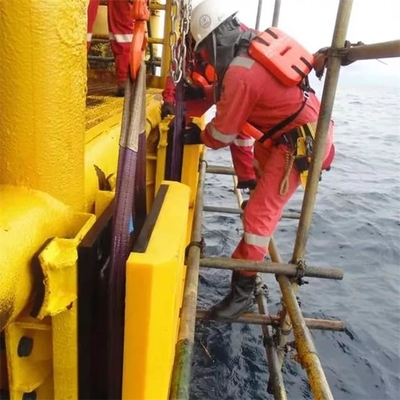
The PE Dock Fender Face Pad is recorded for boat and dock duty: as the contact face on a marine fender, a wharf fender panel, a dock bumper or a rubbing strip along a berth. Its job is to take the sliding and scuffing contact so the fender body behind it does not, and its limits follow from that role.
It works on a berth where a vessel works alongside and rubs up and down the fender line, on a lock wall where a barge slides against the structure, on a tug or barge fender face, and as a replaceable rubbing pad on a pontoon or a small craft dock. In every case the pad is bolted to something that already has the mass and the energy absorption, and the pad supplies the face.
It also works where the environment is the problem: seawater, spray, sun and freeze-thaw do not rot, crack or delaminate a virgin PE pad, and the description's point that the material will not rot or crack when soaked is the reason a plastic face outlasts a timber one at the same berth.
It is not the fender. A 10 mm pad on its own absorbs almost nothing; it is the face of a fender system, and a berth that needs energy absorption needs the rubber body, the pile or the frame behind the pad. Sizing a fender by the pad alone, or treating this listing as a stand-alone bumper, is the most common misunderstanding of the product.
It is also not a structural bearing pad for a concentrated load, and no load rating is recorded. Nor is it a fire-rated or a certified life-saving component: the certification held is a quality management system, not a product approval, and nothing on this listing states a marine classification or an approval by any authority.
Where the hull has a sharp or damaged plate edge, or where a steel fitting will strike the pad repeatedly at one point, the pad should not be relied on to protect it: the pad resists scuffing and impact, not cutting. That is a fender and fendering-geometry question, not a pad question.
Set out the hole pattern against the fender body before drilling the pad, and drill the pad oversize relative to the bolt so the polyethylene can move while the structure does not. Countersink only to the depth the thickness allows: on a 10 mm pad a deep countersink leaves too little material under the head and the pad splits at the hole under impact.
Work from the centre of the pad outward, snug the fasteners in stages rather than one at a time, and finish with the head at or just below the face. A head standing proud of a fender face is a point where the hull catches. Where pads are laid in a row along a berth, keep a consistent gap between them: a tight butt joint traps water and grit, and grit in a tight joint grinds both pads.
Lift and place the pad with a sling or two hands, not by a corner. A 500 mm square of this material is dense enough that a dropped corner takes a chip, and a chipped corner at a bolt hole is where a pad begins to tear off.
Confirm the pad thickness against the order, because the standard is 10 mm and the band runs to 200 mm; confirm the hole pattern and the countersink depth on the drawing; confirm the colour matches the pads already on the berth so replacements are consistent; and confirm the fender body face is flat, because a pad bolted over a dished or pitted fender face will rock and its fasteners will loosen under the first working load.
Tangyin Taixing Engineering Plastics Co., Ltd. manufactures the PE Dock Fender Face Pad and names the PE marine fender among its own product lines, alongside UHMWPE board, UHMWPE liner, outrigger pads, ground mats, conveyor rollers and machined special-shaped parts. The company states more than 20 years of experience, a plant area of more than 25,000 square metres and an annual output of more than 8,000 tons. Beijing Silk Road Enterprise Management Services Co. is the second recorded name under which the same manufacturing and export organisation operates; it is not a separate factory.
The pad is consolidated on the moulding press and finished on the CNC precise finishing machine and the CNC machining centres, with the carving machine and sander available for edge work, and AutoCAD based design support for hole patterns and outlines. For a fender pad the finishing route is what turns a plate into a component: a 500 mm square with four countersunk holes, a chamfered outer edge and rounded corners is a different item from the same square cut straight off the press, and it is priced as such.
In-house checking uses the universal mechanical tester and the abrasion tester, with an oxygen index tester in the same laboratory. No test result from that laboratory is recorded for this listing, so none is quoted. The molecular weight of 5 to 9 million is a recorded material attribute of this listing, not a laboratory result produced for a specific order.
The recorded certification is a quality management system covering the manufacture of polyethylene sheet and machined plastic products. It is a system certification, not a product-by-product approval and not a material test report. No certificate number, issuing body or wider scope is recorded, and nothing on this page should be read as a marine approval, a classification society certificate or a type approval.
The minimum order quantity is 50 pieces, supply ability is 50,000 pieces per month, payment is T/T or Western Union, delivery is 15-20 days after deposit and packaging is a wooden crate or pallet. Fifty pieces of a 500 mm x 500 mm pad is roughly one berth's worth of replacement facings, which is the natural first order for a port maintenance department: enough to re-face a fender line without carrying a warehouse of stock.
In planning terms: fix the thickness, the hole pattern and the colour first, because a pad with a drawn hole pattern is a fabricated part and cannot be priced from the bare size; expect a crate or pallet rather than loose pieces, since a stack of pads must travel flat; and count the 15-20 days from the deposit, adding sea freight and berth access time before a planned maintenance window.
The PE Dock Fender Face Pad is recorded at a standard 500 mm x 500 mm x 10 mm, with the same listing carrying a thickness band of 5 mm to 200 mm. Fifty pieces is the recorded minimum, which matches a berth re-facing rather than a single-pad purchase.
A thicker pad is a change of gauge inside the recorded band and is ordered as a drawing-driven part from Tangyin Taixing Engineering Plastics Co., Ltd., not as a different model. It is normally asked for where the bolt head has to be buried below the rubbing face.
The molecular weight of 5 to 9 million recorded for the PE Dock Fender Face Pad is what gives the face its resistance to gouging and its grain-free, non-splintering behaviour. A hull pressing and sliding on the pad meets a continuous face rather than a brittle one that breaks into hard pieces between hull and fender.
That is also why a virgin PE pad outlasts a timber facing at the same berth, and why Tangyin Taixing Engineering Plastics Co., Ltd. records 100 per cent virgin PE rather than regrind for this part: inclusions on a contact face become the point where a gouge begins.
A countersink in the PE Dock Fender Face Pad removes material directly under the bolt head, and on a 10 mm pad there is only 10 mm to work with. Cut too deep and the remaining section under the head is thin enough to split at the hole when the pad takes an impact.
The remedy is a decision at order stage: either a shallow countersink with a small head, or a pad from higher up the recorded 5-200 mm band where the head can be buried with material to spare. Tangyin Taixing Engineering Plastics Co., Ltd. can machine the countersink to a drawing once the gauge is fixed.
A square edge on the PE Dock Fender Face Pad is a snag point: a moving hull, a fender rope or a protruding fitting can catch it, and a caught edge peels the pad off its fasteners. A chamfer or radius lets the hull ride over the pad instead of into it.
The chamfer also removes the sharp corner that chips when the pad is handled on the quay. No chamfer size is recorded for this listing, so the detail has to be drawn and agreed with Tangyin Taixing Engineering Plastics Co., Ltd. rather than assumed from the standard size.
The PE Dock Fender Face Pad itself does not corrode, but the fastener passes through it into a fender body or a wharf structure, and that is where dissimilar-metal corrosion starts. Use an isolating washer under the head and a sleeve or sealant at the shank where the pad meets steel.
Keep metal off the rubbing face as well. Any washer or head standing proud of the face of the PE Dock Fender Face Pad becomes a hard point that marks a hull, which defeats the reason the pad was fitted by Tangyin Taixing Engineering Plastics Co., Ltd. in the first place.
No. A 10 mm PE Dock Fender Face Pad absorbs very little energy on its own; it is the contact face of a fender system, and the energy absorption comes from the body it is bolted to. Using it alone at a berth where a vessel arrives with way on is a misapplication of the part.
What the pad contributes is the surface: low friction, no splintering, no rot, and a face that can be replaced without renewing the whole fender. Tangyin Taixing Engineering Plastics Co., Ltd. records molecular weight and impact behaviour for the material, but no load or energy rating for this pad as a stand-alone fender.
Fifty pieces of the 500 mm x 500 mm PE Dock Fender Face Pad is about one fender line's worth of replacement facings, so the minimum lines up with a planned maintenance job rather than with a single replacement. That is the practical unit for a port maintenance store.
Supply ability is recorded at 50,000 pieces per month for Tangyin Taixing Engineering Plastics Co., Ltd., so the limit on a berth repair is not the works but the 15-20 day window after deposit plus freight. Order the full line at once so the pads on one berth are from the same run and the same colour batch.
Packaging is recorded as a wooden crate or pallet for the PE Dock Fender Face Pad, and delivery is 15-20 days after deposit received, by sea to a port as the buyer arranges. A crate or pallet keeps the stack flat, which matters because a pad that has taken a set will not sit flush on a fender face.
Plan the discharge as well as the delivery: fifty pads on a pallet are dense and need a forklift at the quay, and the crate should be opened and the pads checked before they go into a store where they may sit for months. Tangyin Taixing Engineering Plastics Co., Ltd. ships from China, so port handling time belongs in the maintenance schedule.
담당자: Mr. Sales
전화 번호: +86 152 1104 0646


 Korean